
Quick Summary
White oak flooring is a solid or engineered hardwood cut from the white oak tree, valued for its neutral tone, tight grain, and closed-cell structure that resists moisture better than many domestic hardwoods. It suits both traditional and modern interiors. The right choice depends on your subfloor, budget, and how the finish will look in your space.
- White oak has a closed grain structure, making it more moisture resistant than many other domestic hardwoods.
- Grain pattern and tone vary from board to board, so ask to see several boards before committing.
- Engineered white oak suits concrete slabs and basements, while solid boards need a stable, above-grade subfloor.
- Order 5% to 10% extra material to cover waste, and keep leftover boards for future repairs.
- Ask for the wear layer thickness in millimeters, since thicker layers can be refinished more times.
Table of Contents
- What Makes White Oak Flooring Stand Out
- White Oak Flooring Pros and Cons
- White Oak Flooring Cost Per Square Foot and Budgeting
- White Oak vs Red Oak Flooring: Which Fits Your Home
- Solid or Engineered White Oak: Choosing the Right Construction
- Durability, Moisture, and Installation Requirements
- Choosing Your White Oak Floor With Viva Floors
- Frequently Asked Questions
What Makes White Oak Flooring Stand Out
Last Updated: October 28, 2026

White oak flooring is one of the most requested hardwood options for Rio Grande Valley homes, and for good reason. White oak is known for its neutral tone, tight grain, and ability to suit a range of interior styles. White oak flooring is a solid or engineered hardwood cut from the white oak tree, prized for its closed-cell structure and its versatility in both traditional and modern rooms.
Before you buy, it helps to understand what sets white oak apart from other hardwoods. Here are seven facts that matter most for your decision.
- White oak has a closed grain structure. This makes it more resistant to moisture than many other domestic hardwoods.
- Grain pattern varies from board to board. Expect natural differences in figure, ray flecks, and tone.
- Finish choice changes the final look dramatically. A clear matte finish and a smoked stain can produce very different floors from the same board.
- Engineered and solid versions both exist. Each suits different subfloors and budgets.
- Plank width affects the overall feel. Wider planks show more of the grain and read as more contemporary.
- Installed cost goes beyond the board price. Underlayment, subfloor prep, and labor all add to the total.
- Care requirements depend on the finish. The right sealer and cleaning routine extend the life of the floor.
Grain Patterns and Natural Variation
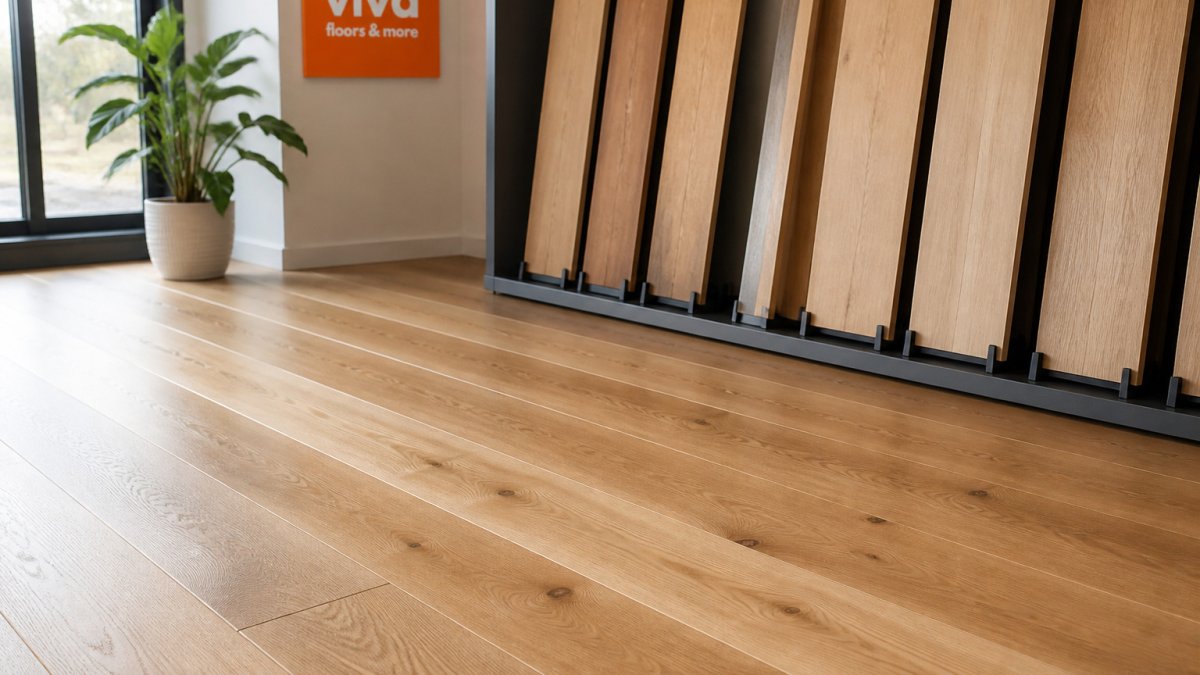
White oak grain is one of its most distinctive features. Quarter-sawn boards show tight, straight lines, while plain-sawn boards display broader cathedral figures. Neither is better; they simply create different looks. Plan for natural variation across the room, and ask to see several boards before committing so you can judge the pattern yourself.
Color, Tone, and How Finishes Change the Look
White oak tends toward warm, honey-leaning tones in its natural state. A clear finish keeps that warmth, while a wash or gray stain can cool the floor significantly. Lighting also plays a role. A floor that looks golden in a showroom can read softer or cooler at home, so view samples in your own space when possible.
White Oak Flooring Pros and Cons
White oak offers real advantages. It is hard, durable, and holds up well to daily foot traffic. Its natural resistance to moisture makes it a reasonable choice for kitchens and living areas. It also takes stain predictably, which gives designers flexibility.
The drawbacks are worth knowing. Grain variation means some customers find the floor less uniform than they expected. White oak can also cost more than common engineered alternatives, and it requires professional installation to perform well. Solid boards need proper acclimation, and any hardwood can show scratches under heavy pet traffic. A quick review of your household needs will show whether those trade-offs make sense.
White Oak Flooring Cost Per Square Foot and Budgeting
What buyers need is a budgeting framework: which line items drive the total, which ones are fixed, and which ones they can control.
The five cost layers of a white oak floor
- Trim and transitions. Baseboards, shoe molding, stair nosings, reducer strips, and threshold pieces where white oak meets tile, carpet, or concrete.
How the material price moves
Because these variables interact, the honest answer to “how much is white oak flooring per square foot” is a range, not a point. Ask any supplier to quote material, labor, and finishing as separate line items so you can compare bids apples to apples.
The waste allowance most homeowners forget
Order 5% to 10% extra material over the measured square footage. Straight-lay installations in simple rectangular rooms sit near the low end; diagonal layouts, herringbone, and rooms with many corners and doorways push toward the high end. Keep the leftover boards, they are your repair stock for future damage, and matching a dye lot later is difficult.
A budgeting checklist
Before you sign a quote, confirm it addresses each of these:
- Measured square footage and the waste percentage applied
For current pricing on specific white oak products and a project-specific quote, contact Viva Floors & More directly.
White Oak vs Red Oak Flooring: Which Fits Your Home
Red oak and white oak look similar at first glance, but they differ in important ways. Red oak has a more open grain and a pinkish undertone, while white oak is generally more neutral and tighter-grained. White oak’s closed cell structure gives it better moisture resistance, which matters in humid South Texas homes. Red oak can be a fine choice for dry interiors and a more traditional look.
Solid or Engineered White Oak: Choosing the Right Construction
Solid and engineered white oak are both real white oak on the surface. The difference is what sits underneath, and that difference determines which subfloors, rooms, and installation methods will work in your home. This is the decision that most often gets made on price alone, and most often gets regretted.
What each construction actually is
Solid white oak is milled from a single piece of hardwood, typically 3/4 inch thick. Because the whole board is oak, it can be sanded and refinished multiple times over its life, a meaningful advantage in a long-term home.
Engineered white oak uses a real white oak wear layer bonded to a plywood or high-density fiber core. The wear layer thickness is the number that matters: a thicker wear layer (roughly 3 mm and up) can be refinished at least once or twice, while a thin veneer (around 1-2 mm) is effectively a one-finish floor. Always ask for the wear layer thickness in millimeters, not just the overall board thickness.
Subfloor compatibility
This is where the two constructions diverge most sharply.
- Solid white oak needs a stable, dry, above-grade subfloor, typically plywood or oriented strand board over a wood-framed floor. It is nailed down. It is generally not recommended over concrete slabs or in basements because it moves too much with moisture changes.
- Engineered white oak is dimensionally stable enough to glue down directly to a concrete slab, float over an underlayment, or nail to a wood subfloor. That flexibility is why engineered is the usual choice for slab-on-grade homes, basements, and rooms over radiant heat.
If your home sits on a slab, common in warm, humid climates, engineered white oak is usually the practical default, and solid white oak is usually ruled out unless a plywood sleeper system is built first.
Installation methods, briefly
| Method | Works with | Notes |
|---|---|---|
| Nail-down | Solid and engineered over wood subfloor | Most traditional; requires a nailer and a sound subfloor |
| Glue-down | Engineered over concrete or wood | Strong, quiet, and dimensionally stable; adhesive choice matters in humid rooms |
| Floating | Engineered over underlayment | Fastest; the floor expands and contracts as one unit |
Acclimation and moisture testing
No installation should begin until the flooring has acclimated to the indoor environment and the subfloor moisture has been measured. For wood subfloors, a moisture meter reading is standard practice; for concrete, a calcium chloride or in-situ relative humidity test is the usual check. Skipping this step is the single most common cause of cupping, gapping, and buckle, and it voids most manufacturers’ warranties.
Which one fits your project
Choose solid white oak if you have a wood-framed, above-grade subfloor, want the longest possible refinishing life, and plan to stay in the home long enough to justify it. Choose engineered white oak if you have a concrete slab, a basement, radiant heat, or a tighter budget, and confirm the wear layer thickness before you buy. Either way, the installation method and moisture testing matter more to how the floor performs than the construction label on the box.
Durability, Moisture, and Installation Requirements
White oak’s hardness makes it well suited to busy households, but no hardwood is immune to moisture or heavy wear. Keep indoor humidity steady, use mats at entries, and address spills promptly. Installation requirements differ by construction type: solid floors need proper acclimation and nailing to a suitable subfloor, while engineered floors can often float or glue down. Height differences where white oak meets other flooring can be managed with the right transition pieces.
Choosing Your White Oak Floor With Viva Floors
At Viva Floors & More, our team helps Rio Grande Valley homeowners, builders, and contractors with expert flooring guidance. Visit one of our showrooms in Pharr or Brownsville, or request an estimate to start planning your project.
Frequently Asked Questions
How much is white oak hardwood flooring per square foot?
For current pricing on the products you are considering, request an estimate from Viva Floors & More.
Is white oak a hardwood?
Yes. White oak is a hardwood, meaning it comes from a broadleaf deciduous tree rather than a conifer. It is a dense, closed-grain species that is widely used for flooring, cabinetry, and furniture. Its hardness and tight grain make it a common choice for high-use residential and light commercial spaces. Because it is a natural material, its color and grain vary from board to board, which is part of its appeal.
Does white oak flooring look gray or yellow?
White oak can look gray, golden, or somewhere between depending on the stain, finish, and lighting in the room. Clear or matte finishes tend to show the natural warm tone of the wood, while gray-toned stains and certain finishes push it cooler. Natural daylight and the color of your walls and cabinetry also change how the floor reads. Viewing sample boards in your own space before committing is the most reliable way to judge the final look.
Can white oak flooring be refinished?
Solid white oak flooring can usually be sanded and refinished several times, provided the wear layer is thick enough to allow it. Engineered white oak can be refinished only if it has a sufficiently thick hardwood top layer, which varies by product, so check the specifications before buying. Refinishing lets you change the stain color or restore the surface after years of traffic. Regular cleaning and protective maintenance extend the time between refinishing projects.
