
Quick Summary
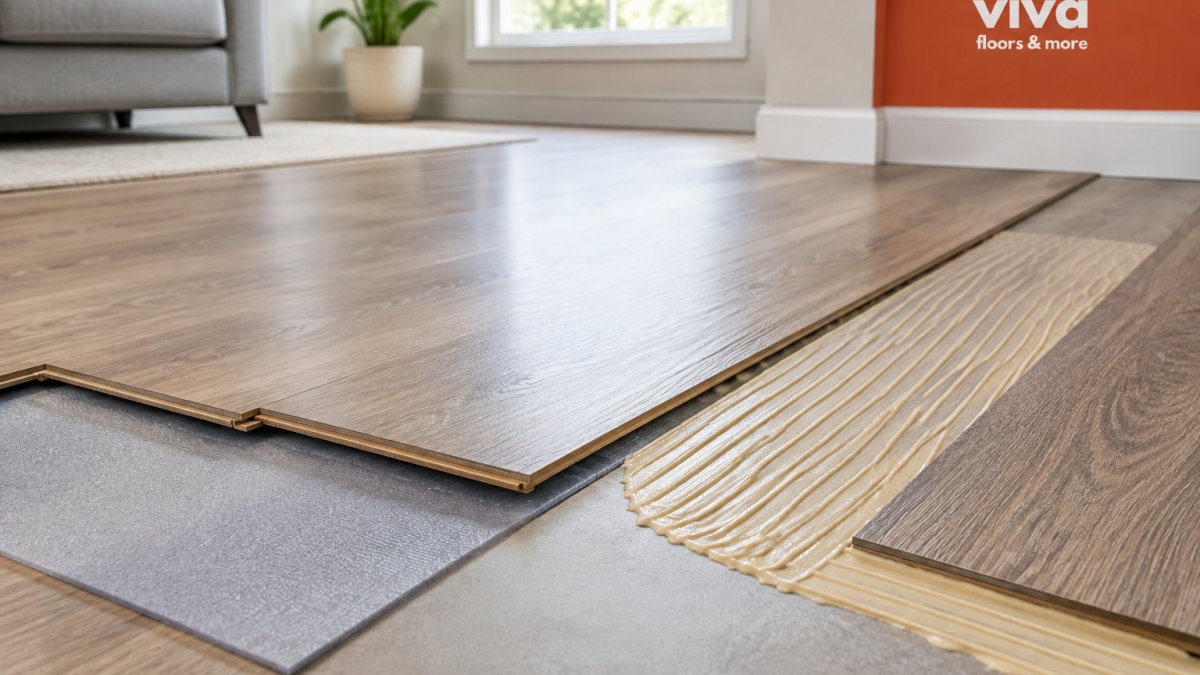
Floating floors sit on the subfloor and lock together plank to plank, making them faster and easier to install and repair. Glue-down floors are bonded to the subfloor with adhesive, so they feel more solid and resist movement. Glue-down suits basements, high-traffic areas and rolling chairs, while floating floors suit dry, flat subfloors.
- Floating floors click together and are not fastened or glued to the subfloor.
- Glue-down floors are bonded directly to the subfloor and stay firmly in place.
- Floating floors are generally faster to install and easier for DIY installers.
- Glue-down floors are often recommended for basements and damp concrete slabs.
- Always check the specific product’s installation instructions and warranty before choosing a method.
Table of Contents
- What Floating and Glue Down Floors Mean
- Pros and Cons of Floating Floors
- Problems with Glue Down Vinyl Plank Flooring
- Glue Down vs Floating LVP for Basement Installs
- Glue Down vs Floating Floor on Concrete
- Cost Breakdown: Pros and Cons of Floating vs Glue Down Floors Cost
- Which Installation Method Fits Your Room and Budget
- Scheduling a Flooring Consultation at Viva Floors & More
- Frequently Asked Questions
What Floating and Glue Down Floors Mean
Last Updated: November 14, 2026
Floating floors and glue-down floors are the two main ways to lay a hard surface like luxury vinyl plank (LVP). The difference comes down to whether the planks are attached to the subfloor. The trade-offs below cover what matters when choosing between the two.
A floating floor sits on top of the subfloor and locks together plank to plank, usually with a click-lock system. It is not fastened or glued to what lies beneath. A glue-down floor is bonded directly to the subfloor with adhesive, so every plank is held in place.
The practical result is that the two methods behave differently. Floating floors move more freely and are generally faster to install. Glue-down floors stay put and tend to feel more solid underfoot. Neither is better in every situation. The right choice depends on the room, the subfloor and how the floor will be used.
Pros and Cons of Floating Floors
Floating floors are popular for good reason. They are often the quicker option, and many DIY installers can handle them with basic tools. Because no adhesive is involved, the planks can be lifted and replaced individually if one is damaged, which is a real advantage when a dropped pan or a pet accident ruins a single board.
The drawbacks are real, though. A floating floor can feel slightly hollow or shift underfoot, especially in a room with rolling chairs or heavy foot traffic. It also depends on a flat, stable subfloor, because any unevenness shows up as clicks and gaps over time.
Pros of floating floors:
- Faster installation with fewer materials
- Easier for DIY installers
- Individual planks are simpler to replace
- No adhesive odors or cure time
Cons of floating floors:
- Can feel less solid or more hollow underfoot
- Needs a very flat subfloor
- May shift or separate in high-traffic areas
Problems with Glue Down Vinyl Plank Flooring
Glue-down vinyl plank has its own set of problems, and most of them come from the installation rather than the product. Adhesive must be spread evenly and matched to the flooring and the subfloor. A poor choice or uneven spread can cause planks to lift, bubble or release at the edges. Such complications often lead homeowners to reconsider the stability of alternative materials like those detailed by JB Roza Flooring.
Removal is the biggest concern. Once a glue-down floor is in place, taking it up usually means scraping away adhesive residue, which takes time and can damage the subfloor. Replacing a single damaged plank is also harder, since the plank has to be cut out and the adhesive cleared before a new one goes in.
Glue-down installations also demand more preparation. A common mistake is skipping the moisture test on a concrete slab before applying adhesive. Moisture trapped under the vinyl can cause the bond to fail months after the job is finished.
Glue Down vs Floating LVP for Basement Installs
Basements bring their own challenges. Moisture is the main concern, and it changes the calculation. Many installers recommend a glue-down or fully adhered system in basements because the adhesive limits the planks’ movement when humidity rises. A floating floor over a damp slab, without a proper vapor barrier, can cup or buckle.
That said, a floating floor can work well in a basement if the slab is dry, a moisture barrier is in place and the space is climate-controlled. In a finished basement that stays dry, the faster installation of a floating floor can be a sensible trade.
The lesson is to test the slab before deciding. Moisture levels, not the floor type alone, determine whether the installation will hold up.
Glue Down vs Floating Floor on Concrete
Concrete is a common subfloor, and it is where the choice matters most. A glue-down floor is often the safer option on a slab because it stays bonded even when the concrete releases moisture or shifts slightly with temperature changes.
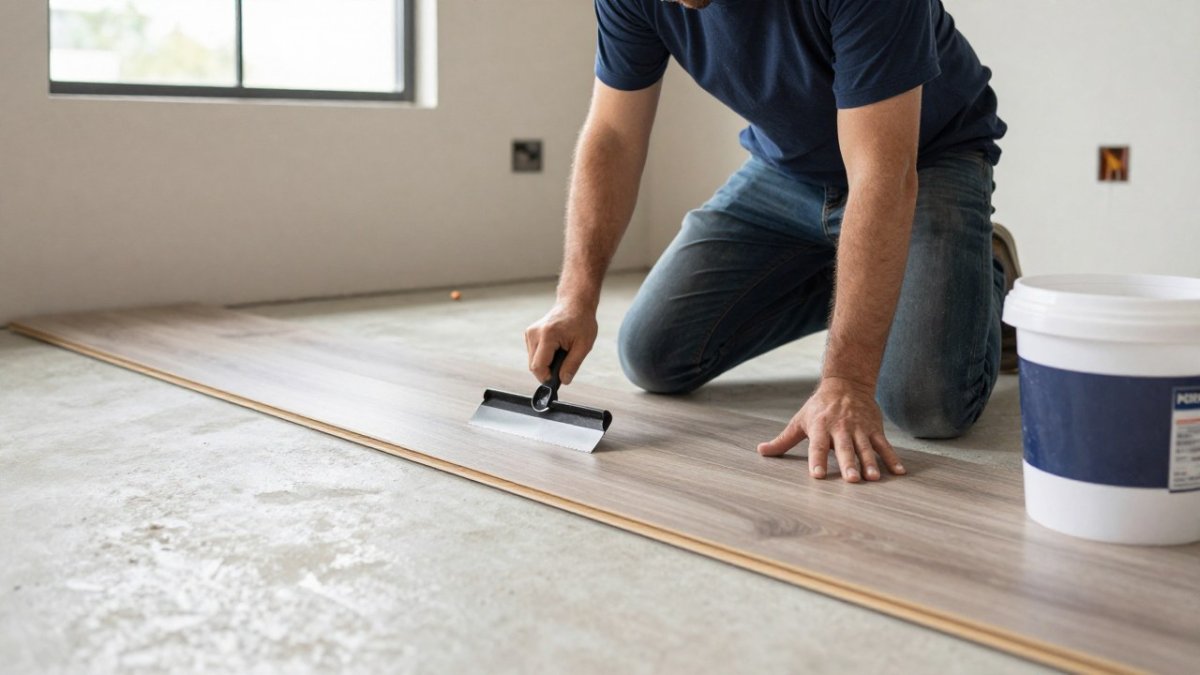
A floating floor can also be installed on concrete, but the slab must be flat, clean and dry. Any high spots or cracks should be leveled before installation. A proper underlayment with a moisture barrier is also important, since it protects the floor from moisture rising through the slab.
!Installer kneeling on a bare concrete slab in a South Texas home, laying vinyl plank flooring with a trowel and adhesive bucket nearby
Before you commit to either method on concrete, check the slab for moisture and flatness. Most installation failures on concrete trace back to skipped preparation rather than the floor itself.
Cost Breakdown: Pros and Cons of Floating vs Glue Down Floors Cost
Most comparisons stop at “floating is cheaper to install.” That is only the first line of the ledger. The real cost difference between floating and glue-down floors shows up across four buckets: material, adhesive and underlayment, subfloor preparation, and labor and removal. Comparing only the first bucket is how homeowners end up surprised six months later.
Material. The plank or tile itself usually costs the same whether you float it or glue it down. What changes is what the product requires. Some LVP lines are engineered only for floating (click-lock edges, attached underlayment), and some are engineered only for glue-down (square edges, no attached pad).
Adhesive and underlayment. A glue-down job adds trowel-applied adhesive, which is a real line item and scales with square footage. A floating job usually adds an underlayment or vapor barrier instead.
Subfloor preparation. This is the bucket buyers underestimate most. Both methods need a flat, clean, dry subfloor, but glue-down is less forgiving of minor flatness variation because the adhesive needs full contact. Floating floors tolerate small dips but telegraph high spots as clicks and gaps.
Labor and removal. Floating installation is faster per square foot because there is no adhesive spread and no cure window. Glue-down takes longer, and removal later takes much longer because the adhesive has to be scraped or ground off. If you plan to replace the floor in five to ten years, build removal into the comparison now rather than discovering it at tear-out.
Lifecycle framing. A cheaper floating floor over an unprepared slab can cost more over its life than a properly installed glue-down floor, because loose planks, joint separation, and premature replacement eat the upfront savings. A glue-down floor costs more to remove, so it makes more sense when you intend to keep it a long time.
Pricing depends on quantity, delivery, and the variables above, so the accurate way to compare is to request a quote from Viva Floors & More that itemizes material, adhesive or underlayment, subfloor preparation, labor, and removal for your specific space. Ask for the subfloor preparation line separately, since that is where quotes most often diverge.
Watch out: a quote that bundles subfloor preparation into a single labor number hides the one cost most likely to blow the budget, so ask for it broken out before you compare two bids.
Which Installation Method Fits Your Room and Budget
The right method depends less on the room’s name and more on four variables: moisture, subfloor flatness, traffic and point loads, and whether the product you want is even approved for that installation method. Run each room through those four before you look at the table below.
Kitchens. Kitchens combine water risk with heavy point loads from appliances. Glue-down is often the safer choice because a bonded plank resists lifting at edges where spills and mopping happen, and it stays put under a refrigerator or range.
Basements. Moisture drives this decision. Many installers prefer a glue-down or fully adhered system over a slab that sees humidity swings, because the adhesive limits plank movement. A floating floor can work in a dry, climate-controlled basement with a proper vapor barrier, but over a damp slab without one it can cup or buckle.
Home offices and rooms with rolling chairs. Rolling loads are hard on floating floors. A chair with casters concentrates weight on small points and can stress click joints, causing separation over time. Glue-down handles rolling loads better because every plank is bonded.
Rentals. Rentals favor glue-down for durability under heavy, careless use, but favor floating for faster turnover between tenants and easier partial repair. The tie-breaker is usually the lease term: short holds push toward floating, long holds push toward glue-down.
Commercial spaces. High-traffic commercial floors almost always call for glue-down, because bonded planks resist shifting under constant foot traffic and rolling loads. Floating floors can work in light-commercial settings, but check the product’s commercial warranty before specifying one.
Product compatibility and warranty. This is the variable most buyers skip. Many manufacturers approve a given product for one installation method only, and installing it the other way can void the warranty.
Use this as a starting point, then confirm against the product instructions:
| Situation | Better Choice | Why |
|---|---|---|
| Bedroom or living room, dry subfloor | Floating | Faster, simpler install |
| Busy hallway or entry | Glue down | Stays firmly in place under traffic |
| Basement or damp concrete | Glue down | Limits plank movement; test slab first |
| Rental, short lease | Floating | Faster turnover, easier partial repair |
| Rental, long hold | Glue down | Durable under heavy use |
| DIY project on a tight budget | Floating | Lower labor and fewer materials |
| Office with rolling chairs | Glue down | Resists point loads and joint stress |
| Commercial, high traffic | Glue down | Bonded planks resist shifting |
Budget matters, but so does the condition of the room. If the subfloor is uneven or damp, the lower upfront cost of a floating floor may not last, and if the product is not approved for floating, the savings disappear the first time a plank lifts.
Watch out: choosing a method before checking the specific product’s installation instructions and warranty terms is the most common way homeowners end up with a floor that fits the room but not the paperwork.
Scheduling a Flooring Consultation at Viva Floors & More
Choosing between floating and glue-down floors is easier with expert input. At Viva Floors & More, our team helps homeowners, builders and contractors match the method to the room, the subfloor and the budget.
Visit Viva Floors & More to request an estimate and start planning your floor.
Frequently Asked Questions
Is floating flooring a better choice than glue-down flooring?
Neither method wins on every project. Floating floors suit DIY installs, quick renovations and rooms you may want to change later, because planks lock together and can be lifted for repairs. Glue down floors suit high-traffic spaces, rolling chairs and areas that see heavy moisture or movement, because the adhesive bonds the planks to the subfloor and limits shifting. Match the method to the room, the subfloor and how long you plan to keep the floor.
What are the downsides of glue-down flooring?
The main downsides are installation time, difficulty and repair. Glue down installs require a clean, flat, properly prepared subfloor and adhesive that must cure before use. Removing damaged planks can be messy and may damage the subfloor. Replacing a single plank takes more work than with a floating floor. Ask your installer to confirm adhesive compatibility with your chosen product and subfloor before work begins.
Can you install glue-down flooring over concrete?
Yes, glue down vinyl plank is commonly installed over concrete, but the slab must be dry, level and free of sealers, curing compounds and cracks that could telegraph through the floor. Moisture testing is important before installation, and the adhesive and product warranty should both list concrete as an approved subfloor. Floating floors can also go over concrete, usually with an underlayment that provides a moisture barrier.
Which flooring installation method costs more?
Total cost depends on the product, subfloor condition, adhesive, labor and removal of old flooring. Glue down installs often cost more in labor because of subfloor preparation and adhesive work, and they can add material cost for adhesive. Floating installs typically need less prep and may be quicker to complete. Pricing depends on quantity, delivery and project scope, so request a quote from Viva Floors & More for current pricing.
