
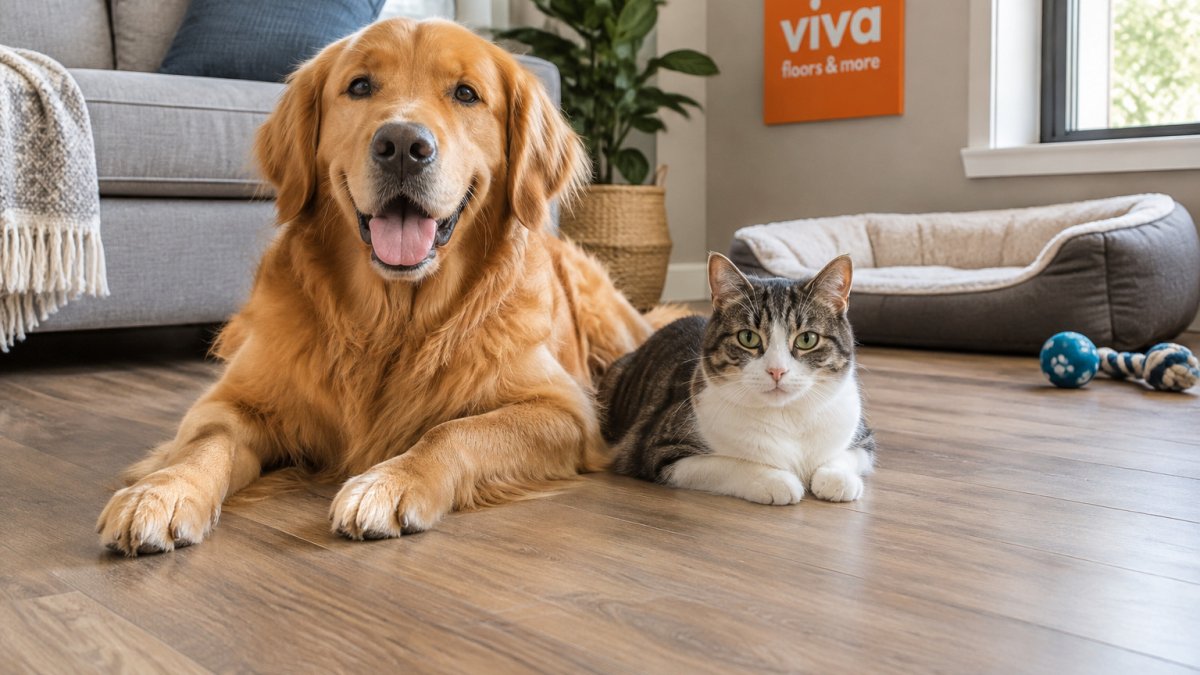
Quick Summary
For most pet households, the best flooring for homes with pets is waterproof luxury vinyl plank with a thick wear layer, because it resists claw scratches and accidents better than laminate or hardwood. Porcelain tile is a strong alternative in entryways and kitchens, though it can feel cold and slippery for some dogs.
- Waterproof LVP resists moisture and accidents better than standard laminate.
- Check the wear-layer thickness on LVP and the AC rating on laminate before buying.
- Laminate cores can swell at seams when liquid reaches them, so clean accidents promptly.
- Choose textured or matte finishes with slip-resistance ratings for senior or arthritic dogs.
- Use enzymatic pet-odor cleaners, since some ammonia-based products can encourage repeat marking.
Table of Contents
- Why Pets Change the Flooring Decision
- Flooring Options for Pet Owners: LVP, Laminate, Tile, and Hardwood
- LVP vs. Laminate for Dogs: Which Holds Up Better
- Best Flooring for Dogs That Pee: Waterproofing and Cleanup
- Best Flooring for Pets and High Traffic Homes
- Traction, Comfort, and Best Flooring for Dogs to Walk On
- Choosing Flooring for Your Pet and Household, and Booking a Consultation at Viva Floors & More
- Frequently Asked Questions
Why Pets Change the Flooring Decision
Flooring in a home with pets has to do more work than flooring in a home without them. Claws scratch, accidents happen, and a dog that runs across a slick floor can end up with a sprain.
Many pet owners discover the problem only after installation. A floor that looks perfect in a showroom can show scratches within a few months of a dog’s daily play. Asking the right questions before buying saves money and frustration.
The advice below reflects the trade-offs that matter most for households with dogs and cats.
Flooring Options for Pet Owners: LVP, Laminate, Tile, and Hardwood
Four flooring types come up most often in pet households. Each handles claws, moisture, and traction differently.
Luxury vinyl plank (LVP) is a multilayer product with a wear layer that resists scratches and moisture. Readers comparing hardwood with these options can see how white oak wears and what it really costs.
Laminate is a fiberboard core with a printed photographic layer and protective top coat.
Tile and porcelain is extremely hard and easy to sanitize.
Hardwood feels warm and can be refinished, but it scratches and dents easily under claws and shows water damage quickly.
Watch out: a floor labeled “water-resistant” is not the same as “waterproof.” Ask for the specific product rating before assuming accidents will wipe up cleanly.
LVP vs. Laminate for Dogs: Which Holds Up Better
For dog owners, LVP and laminate are the two options usually compared most closely. Both are sold in planks that resemble wood, and both cost less than solid hardwood. Their performance differs in ways that matter once a dog moves in, and the differences come down to construction rather than brand or color.
Scratch and Claw Resistance
Scratch resistance depends largely on the wear layer and surface finish rather than the material name alone. On LVP, the wear layer is a transparent vinyl film measured in mils (thousandths of an inch), and thicker wear layers generally resist claw marks and traffic wear better.
Texture matters as well as thickness. Embossed or hand-scraped surfaces can help hide light scratches, while very smooth high-gloss finishes tend to show marks more readily. Ask for the wear-layer rating on any LVP and the AC rating on any laminate before you compare prices.
Water and Accident Resistance
Waterproof LVP is generally more tolerant of spills than standard laminate because its core is designed not to absorb moisture. Laminate cores are typically high-density fiberboard (HDF), which can swell when liquid reaches the core, especially at the seams and edges.
Laminate is generally better suited to drier households, and owners who choose it anyway should prioritize products with tightly sealed joints and clean up accidents promptly rather than relying on the water-resistant label.
Side-by-Side Performance Ratings
Broad claims like durable or pet-proof make trade-offs hard to compare. The table below scores each material on a 1-to-5 scale for the factors that matter most in pet homes; the scores reflect typical residential products, not the best or worst example of each category.
| Factor | Waterproof LVP | Laminate |
|---|---|---|
| Scratch resistance | 4 (rises with wear layer) | 3 (rises with AC rating) |
| Water and accident resistance | 5 | 2 |
| Traction and slip resistance | 3 to 4 (finish dependent) | 3 |
| Noise and acoustic comfort | 3 (better with underlayment) | 3 to 4 (thicker core dampens sound) |
| Comfort underfoot | 3 | 3 |
| Ease of repair | 3 (plank replacement) | 2 (seams and swelling) |
Use the scores as a starting framework, then adjust for the specific product’s specifications. A premium laminate with an AC5 rating can beat a thin-wear-layer LVP on scratches, and a low-end LVP can underperform on traction if the finish is slick.
Installation and Failure Risks
Installation quality often determines whether a moisture-resistant floor actually prevents damage. Subfloor preparation matters: a floor that is not flat within the manufacturer’s stated tolerance can cause clicking, gapping, and joint failure. Because seams and gaps can trap pet hair as well as moisture, keeping them clear with a cordless vacuum suited to pet hair helps preserve the floor’s condition; Nuksy offers another perspective on choosing one.
Floors installed without the specified expansion gap at walls and transitions can buckle in humid conditions, and gaps at seams can allow liquid to reach the subfloor.
Total Cost of Ownership
Initial price is only part of the comparison. LVP and laminate both cost less to install than tile or hardwood, but repair and replacement costs differ. LVP planks can often be replaced individually if you keep spares from the same lot, while laminate repairs are harder because the locking joints and swollen seams may require replacing a larger area. A lower upfront price does not always mean lower total cost if a product fails at the seams in a household with frequent accidents.
Best Flooring for Dogs That Pee: Waterproofing and Cleanup
Accidents are the most stressful part of pet ownership for most households. The right floor makes cleanup simple and limits lasting damage.
Waterproof LVP and sealed porcelain tile are generally suited to accidents, since liquid can be wiped up without soaking into the core, and enzymatic cleaners can help break down urine odor.
Watch for moisture that reaches the seams. You can learn how to measure gaps, raise indoor humidity, and know when to call a pro for lasting repairs.
A common mistake is assuming a sealant or coating will make any floor pet-proof.
Best Flooring for Pets and High Traffic Homes
Homes with multiple pets, young children, or frequent guests put more wear on floors than a quiet single-dog household. In these homes, durability should drive the decision more than appearance.
Commercial-grade LVP with a thick wear layer is generally suited to constant foot and paw traffic. Porcelain tile is generally scratch-resistant, though it benefits from a suitable rug or mat in areas where dogs slide.
Even durable floors can show wear in entryways, near food bowls, and along frequently used paths. Keeping spare planks from the original lot can make localized repairs easier later.
Traction, Comfort, and Best Flooring for Dogs to Walk On
Traction matters as much as durability. Dogs with arthritis or those recovering from injury can slip on smooth finishes, and slipping repeatedly can strain joints over time. Look for textured or matte finishes rated for slip resistance when you shop. Slip resistance is often expressed through a coefficient of friction rating; check the manufacturer’s specification for any tile you consider.
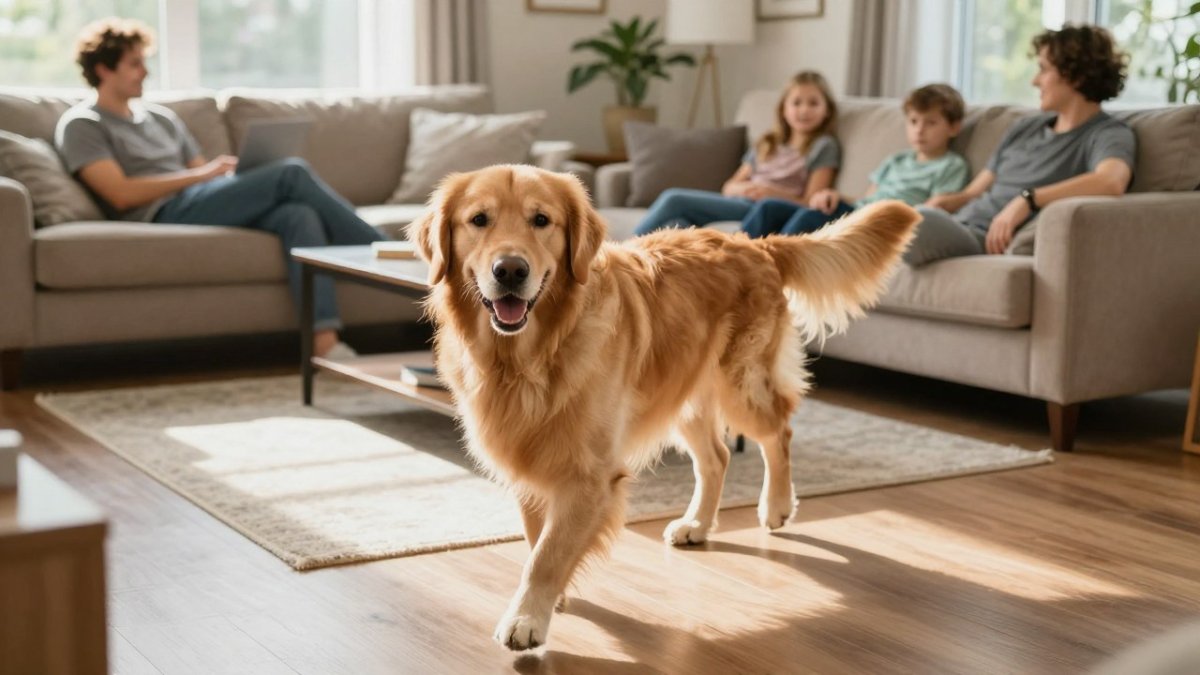
Comfort varies too. Hard tile can be cold and unforgiving for older dogs lying on it for hours. LVP and laminate offer slightly more give underfoot, and a suitable underlayment adds further cushioning and sound reduction.
Acoustic Comfort and Noise
Nail noise is one of the most common complaints after a flooring change. Hard surfaces amplify the click of claws and the sound of traffic between rooms. Thicker underlayment, cork or foam padding, and carpet runners in high-traffic paths reduce both impact noise and sound transmission to rooms below. Laminate with a thicker core and attached underlayment often dampens sound better than thin LVP, while tile transmits sound most readily unless it is installed over a sound-reduction membrane.
Recommendations by Pet and Household Scenario
A single recommendation does not fit every household. The scenarios below show how the trade-offs shift.
- Large dogs with long nails: prioritize a thick wear layer on LVP or an AC4-to-AC5 laminate, and add mats at doorways where nails dig in during turns.
- Senior or arthritic dogs: favor textured LVP or matte tile with good slip resistance, and use low-pile rugs on slick paths to reduce slipping.
- Puppies and homes with frequent accidents: waterproof LVP or sealed porcelain tile, with seams minimized and cleanup supplies kept handy.
- Cats: cats scratch surfaces and mark vertically and horizontally; LVP and tile resist scratching and moisture well, and grout should be sealed on tile.
- Multiple pets and high traffic: commercial-grade LVP or porcelain tile in entryways and main paths, with spare planks kept for repairs.
- Rental homes: LVP is often the practical choice because it tolerates accidents and is easier to repair than laminate or hardwood.
Indoor Air Quality and Safety
Pet households should also consider emissions and finishes. Ask whether a flooring product carries a low-emission certification and check whether the finish or adhesive is compatible with the enzymatic cleaners you will use for pet accidents. Some cleaning products can dull finishes or leave residue that attracts dirt, so match the cleaner to the manufacturer’s recommendations.
A floor can still be damaged by the wrong cleaner, and some ammonia-based products can encourage repeat marking in cats, so choose a pet-specific enzymatic cleaner and follow the label.
Choosing Flooring for Your Pet and Household, and Booking a Consultation at Viva Floors & More
Start by listing your household’s actual conditions: how many pets, their size and claw type, how often accidents happen, and whether children or elderly family members will share the space. Those answers narrow the options quickly.
Ask about the wear-layer thickness, the waterproof rating, the slip-resistance rating, and the warranty terms for any product you consider. Manufacturer specifications vary, so read the fine print before buying.
Pricing depends on the product, quantity, and installation requirements, so the most reliable way to compare options is to request a quote. You can also browse the showroom and product displays before you commit.
Summary of common pet-household choices
| Flooring type | Scratch resistance | Accident resistance | Traction | Best for |
|---|---|---|---|---|
| Waterproof LVP | High (depends on wear layer) | High | Moderate to good | Most pet homes |
| Laminate | Moderate | Moderate (seams at risk) | Moderate | Drier households |
| Porcelain tile | High | High | Varies by finish | Entryways, kitchens |
| Hardwood | Low to moderate | Low | Good | Owners who accept wear |
Frequently Asked Questions
What type of flooring is most durable for pets?
Luxury vinyl plank (LVP) and porcelain tile are generally the most durable options for pet owners. LVP has a wear layer that resists claw marks and handles daily activity well, while porcelain tile is highly resistant to scratches and moisture. Engineered hardwood can work in pet homes but scratches more easily than these two. Choose a wear layer thickness suited to your pet’s size and activity level, and check the product specifications before buying.
Will dog urine ruin vinyl plank flooring?
Waterproof LVP is designed to resist liquids, so a single accident usually wipes up without lasting damage if it is cleaned promptly. The risk comes from urine that seeps into seams or sits under the planks for long periods. Sealed seams, prompt cleanup, and an enzyme cleaner that breaks down odor compounds will protect the floor. Non-waterproof products, such as some laminates, are more vulnerable to swelling at the edges.
Is LVP or laminate better with dogs?
LVP is usually the better choice for dogs because its vinyl surface and waterproof core handle accidents and moisture more reliably than most laminate. Laminate resists scratches reasonably well but can swell if liquid reaches the seams. Both can be installed over a suitable underlayment. If budget is the main concern, compare the wear layer rating and water resistance claims on each product rather than price alone.
What flooring is best for pets and high-traffic areas?
For high-traffic areas with pets, look for a thick wear layer, a waterproof core, and a surface rated for commercial or heavy residential use. LVP and porcelain tile both perform well in these conditions. Hardwood can work in lower-traffic rooms but shows wear sooner in busy hallways and entryways. Place washable rugs at entry points to reduce grit and paw wear on any floor.
Is there truly dog-proof flooring?
No flooring is completely dog-proof, but some products resist damage far better than others. Porcelain tile and high-wear-layer LVP resist scratches and stains best. Even these can show wear over time with large dogs, so the realistic goal is to choose a floor that holds up for years with routine care. Keep nails trimmed, address accidents quickly, and use area rugs in high-impact zones.
