Last Updated: October 25, 2026
Quick Summary
The best flooring brands for builders are those with published wear-layer specs, stable dye lots, real warranty terms, and stock you can reorder mid-build. Brand reputation matters less than lot consistency, so a mid-tier brand with steady inventory beats a premium brand that discontinues your color mid-project.
- Builders should judge brands on spec transparency, supply reliability, and installation tolerance.
- Wear layer is the single most predictive spec for service life, measured in mils.
- Rigid-core LVP with a 20 mil wear layer or higher suits market-rate rentals.
- Laminate is not waterproof, so keep it out of bathrooms and laundry rooms.
- Plan for 5-10% waste on simple rooms and 10-15% on rooms with many angles.
Table of Contents
- What Builders Actually Need From a Flooring Brand
- Best LVP Flooring Brands for High-Traffic Builds
- Best Hardwood Flooring Brands When Buyers Expect Real Wood
- Best Laminate Flooring Brands for Budget-Conscious Projects
- How to Choose Quality Vinyl Flooring: Specs That Decide Performance
- Comparing Whole-Home Flooring Costs and Installation Economics
- Request a Flooring Estimate for Your Next Build
- Frequently Asked Questions
What Builders Actually Need From a Flooring Brand
Builders shopping for the best flooring brands for builders rarely need the flashiest catalog. They need consistent inventory, honest specs, and a supplier who answers the phone in week six of a project.
Here is the short answer. The best flooring brands for builders are the ones with published wear-layer specs, stable dye lots, real warranty terms, and stock you can reorder mid-build.
Three criteria decide whether a flooring brand belongs on a builder’s approved list:
- Spec transparency: wear layer measured in mils, thickness in millimeters, and a written warranty you can read before you buy
- Supply reliability: the SKU you sampled in March still exists in July, in the same color
- Installation tolerance: planks that click cleanly over a subfloor that is not perfectly flat, because job-site subfloors rarely are
What most guides miss is that brand reputation matters less than lot consistency. If you are sourcing in volume for multiple units, our guide to bulk flooring supplies for local contractors covers how to plan orders around build schedules.
Best LVP Flooring Brands for High-Traffic Builds
Luxury vinyl plank is the default choice for rental units, multi-family builds, and commercial lease spaces, and for good reason. It handles moisture, cleans easily, and installs fast.
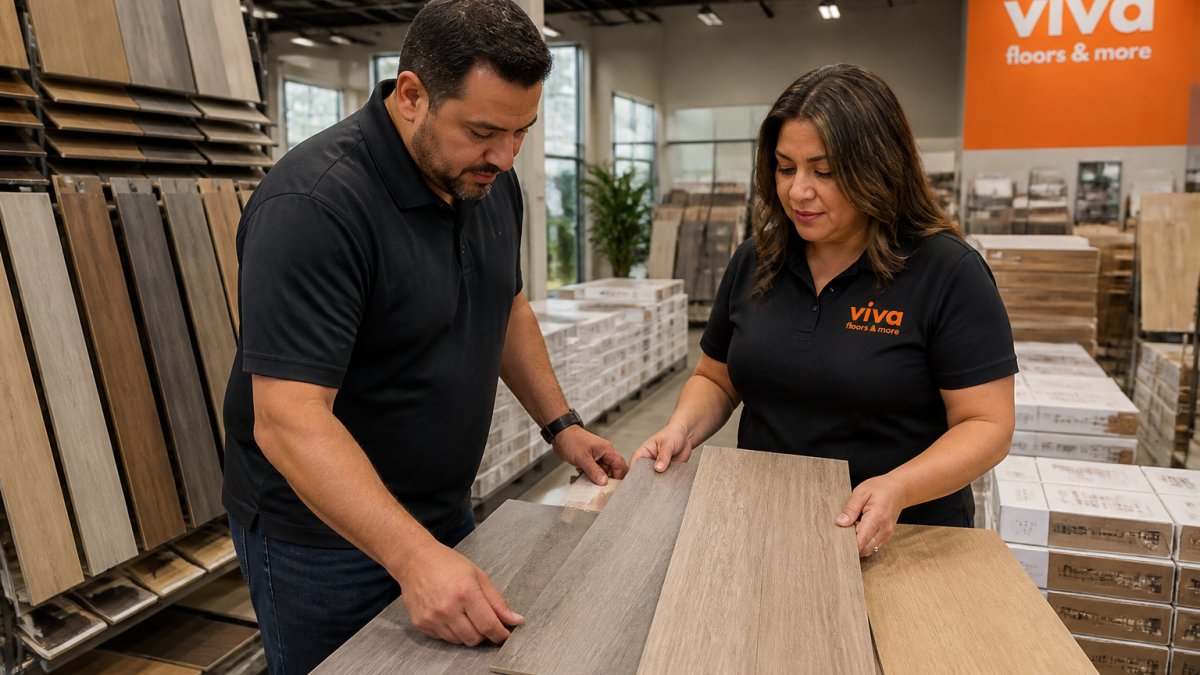
Our shortlist for high-traffic work:
- Commercial-grade LVT lines for offices, clinics, and schools, where the spec sheet lists a thicker wear layer and a commercial warranty
- Rigid-core LVP for rentals and multi-family units, since the rigid backing hides minor subfloor imperfections
- Standard glue-down LVT for lease spaces where budget drives the decision and traffic is moderate
A common mistake is specifying residential LVP for a commercial corridor. For projects that need commercial specifications and volume pricing, see our commercial flooring options for the Rio Grande Valley.
Builder-Specific Criteria for LVP Selection
Most LVP roundups rank brands by homeowner preferences, color, feel, and price per square foot. Builders need a different scorecard. Before you approve an LVP brand for a multi-unit or phased project, run it through these five filters:
- Volume pricing tiers and order minimums. Ask for the brand’s builder price sheet, not the retail tag. Most manufacturers publish tiered pricing that drops at pallet or truckload quantities. Confirm whether the tier applies per SKU or per total order, and whether mixed-color orders count toward the same tier.
- Lead times and stock depth. A brand that quotes two weeks on a sample may quote eight weeks on a 20,000-square-foot order. Request current lead times in writing and ask whether the SKU is stocked domestically or made to order. Domestic stock shortens the reorder cycle when a crew runs short.
- Discontinued-product risk. Manufacturers retire colors and constructions on rolling cycles. Before you spec a color across 40 units, ask the rep how long that SKU has been in the line and whether a replacement is already listed. A color that has been active for years is safer than a new introduction.
Build a one-page spec sheet for each approved LVP brand listing wear layer in mils, overall thickness in millimeters, commercial warranty term, current lead time, and dye-lot policy. Require the rep to sign it. That sheet settles most mid-project disputes before they start.
Matching LVP Construction to Project Type
Not every LVP construction belongs in every unit. Use this quick mapping:
| Project Type | Recommended Construction | Why |
|---|---|---|
| Market-rate rentals | Rigid-core LVP, 20 mil wear layer or higher | Hides minor subfloor variation; resists tenant abuse |
| Affordable housing | Glue-down LVT, 12-20 mil | Lower material cost; stable under heavy furniture |
| Multi-family common areas | Commercial-grade LVT, 28 mil or higher | Meets commercial traffic; easier to clean |
| Light-commercial lease spaces | Commercial glue-down LVT | Replaceable in sections; commercial warranty |
| Model homes and sales centers | Rigid-core LVP with enhanced visuals | Presentation quality without hardwood cost |
Wear layer is the single most predictive spec for service life. A 12 mil wear layer suits light residential traffic; 20 mil handles rentals and pets; 28 mil and above enters commercial territory. Ask for the number in mils, in writing, and compare like for like, some brands publish wear layer in millimeters, which requires conversion.
For projects that need commercial specifications and volume pricing, see our commercial flooring options for the Rio Grande Valley.
Best Hardwood Flooring Brands When Buyers Expect Real Wood
Hardwood belongs in custom homes and higher-end resales, where the buyer inspects the floor as a feature, not a surface.
Solid hardwood moves with seasonal moisture. Engineered hardwood handles that movement better in our climate, which is why we steer most South Texas builds toward engineered planks with a thick wear veneer.
Watch out: buying hardwood by price per square foot alone usually means a thinner veneer that cannot be refinished. You can review the hardwood lines we stock to compare veneer thickness across brands before you spec.
| Flooring Type | Best For | Key Spec to Check | Maintenance Level |
|---|---|---|---|
| Rigid-core LVP | Rentals, multi-family | Wear layer in mils | Low |
| Glue-down LVT | Commercial lease spaces | Commercial warranty | Low |
| Engineered hardwood | Custom homes | Veneer thickness | Medium |
| Laminate | Budget builds | AC rating | Low |
| Carpet tile | Offices, clinics | Face weight | Medium |
Best Laminate Flooring Brands for Budget-Conscious Projects
Laminate is the value play, and it has earned back trust after years of being dismissed as a cheap alternative. The best laminate flooring brands for builders offer realistic wood-look visuals at a lower installed cost than hardwood, with better scratch resistance than most people expect.
Two specs separate good laminate from bad:
- AC rating: the abrasion class rating tells you how the surface holds up under traffic
- Core density: denser cores resist moisture swelling at the seams
For rental properties and spec homes, laminate delivers the real-wood feel buyers want without the maintenance conversation. Where it falls short is water exposure. Laminate is not waterproof flooring, so keep it out of bathrooms and laundry rooms.
Installed Cost and Lifecycle Economics
Material price per square foot is only the first line of a laminate budget. Builders should compare laminate against LVP and engineered hardwood on installed cost, waste allowance, and expected service life:
- Material cost: laminate typically lands below engineered hardwood and near the low end of LVP. Ask for builder pricing at pallet quantities.
- Underlayment: most laminate requires an underlayment for sound and moisture control. Some brands attach it to the plank; others sell it separately. Confirm which applies to your SKU.
- Subfloor tolerance: laminate demands a flatter subfloor than rigid-core LVP. Budget for leveling compound on older slabs, or the floor will telegraph imperfections and click seams will fail.
Laminate is not waterproof. A single supply-line leak or an overflowing tub can swell the core beyond repair. For bathrooms, laundry rooms, and basements, spec LVP or tile instead.
Brand-Level Guidance for Builders
Rather than naming a single winner, evaluate laminate brands on the same builder criteria you apply to LVP:
- AC rating transparency: the brand should publish the AC rating on the spec sheet, not bury it in marketing copy. AC3 suits residential; AC4 and AC5 handle heavier traffic.
- Core construction: high-density fiberboard cores resist swelling better than standard cores. Ask for the density figure and the brand’s moisture warranty terms.
- Warranty exclusions: laminate warranties often exclude moisture damage and require specific underlayment. Read the exclusions before you spec.
For a deeper breakdown of wear resistance and long-term performance, our durable flooring buyer’s guide walks through how each spec affects lifespan in high-traffic rooms.
How to Choose Quality Vinyl Flooring: Specs That Decide Performance
Quality vinyl flooring is defined by four numbers, and every one of them appears on the product spec sheet. If a brand will not show you these, walk away.
- Wear layer, measured in mils: this is the clear top film that takes the abuse. Thicker wear layers last longer under pets, carts, and chairs
- Overall thickness, in millimeters: thicker planks feel more solid and tolerate subfloor variation better
- Construction: rigid-core, WPC, or glue-down, each suited to different rooms and traffic
- Warranty terms: read the exclusions, because most claims fail on installation or moisture grounds, not product defect
A common mistake is comparing wear layers across brands that measure differently. Ask for the number in mils, in writing.
For a deeper breakdown of wear resistance and long-term performance, our durable flooring buyer’s guide walks through how each spec affects lifespan in high-traffic rooms.
Comparing Whole-Home Flooring Costs and Installation Economics
Whole-home projects reward planning, because the cheapest floor per square foot is rarely the cheapest floor per project. Installation economics decide the real number.
Three cost drivers builders underestimate:
- Subfloor prep: leveling and patching can rival material cost on older slabs
- Transition pieces: every doorway and material change adds trim and labor
- Waste factor: complex room shapes push waste higher, and reordering a discontinued SKU costs more than the original order
A practical approach is to price the whole home in one pass, room by room, with one installer. Fewer material changes mean fewer transitions and a faster crew. Our breakdown of professional flooring installation costs gives current figures you can drop into a build budget.
Request a Flooring Estimate for Your Next Build
The hardest part of flooring a build is not picking a color. It is locking a spec, a quantity, and a delivery window that survives the schedule. Most delays we see trace back to a brand change mid-project, not a bad product.
Viva Floors & More carries Cali, Robbins, Mohawk, Shaw, and MSI across two showrooms, with expert consultation for builders, remodel contractors, and DIYers alike. We help you compare wear layers side by side, confirm stock before you spec, and match product to budget across every room.
Get started with Viva Floors & More and spec your next build with brands you can reorder with confidence. Request an estimate and we will walk your plans room by room.
Frequently Asked Questions
Which flooring brands offer the best options for builders?
The best flooring brands for builders balance durable wear layers, clear warranties, and reliable supply. For vinyl plank, look for a wear layer of at least 12 mil on residential builds and 20 mil or higher for commercial or rental units. Hardwood brands should offer consistent milling and finish warranties. Laminate brands need strong AC ratings and moisture-resistant cores. Viva Floors & More carries trusted names like Cali, Mohawk, Shaw, Robbins, and MSI, so builders can compare specs side by side.
How can you tell if a vinyl floor is good quality?
Check the wear layer thickness first: 6 to 8 mil suits light residential use, 12 to 20 mil handles busy households and pets, and 20 mil or more is commercial-grade. Next, look at the core construction. A rigid core resists indentation and moisture better than a flexible one. Ask about the warranty terms, especially what voids coverage, such as improper subfloor prep. Finally, confirm the plank thickness, since 5 mm and up feels more solid underfoot and hides subfloor imperfections.
What is the most durable flooring for commercial use?
Commercial spaces need flooring that resists heavy foot traffic, rolling loads, and moisture. Luxury vinyl plank and tile with a 20 mil or higher wear layer are common choices for retail and office builds because they handle abuse and are easy to replace in sections. Porcelain tile offers the highest scratch and moisture resistance. For commercial projects, confirm the product meets the manufacturer’s commercial warranty requirements and check local building code requirements for slip resistance in your space.
What should builders compare when choosing a flooring brand?
Compare four things: wear layer or finish durability, warranty length and claim limitations, supply consistency, and total installed cost. A low price per square foot means little if a brand runs out of stock mid-project or denies claims over installation method. Ask for current lead times, confirm the same dye lot is available across the whole order, and review what the warranty excludes. Viva Floors & More helps builders compare these factors across brands before committing to a full order.
